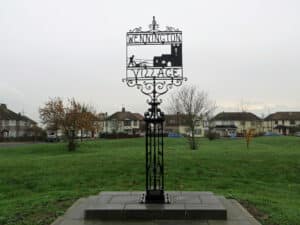
Town and village greens are the essence of rural England and Wales.
Story-book images of village greens tend to be of an expanse of grass in the centre of a village complete with oak tree and seat, or a carefully-manicured recreation ground just outside the village, where cricket is played in the lengthening shadows of a summer evening, and the villagers dance round the maypole.
In fact, they are much more than that, and very varied.
Did you know?
The best way to protect your village/town green is to register it. Registering it gives it protection.
Don't take it for granted.
What is a village green?
A green is any land on which a significant number of inhabitants of any area has indulged in lawful sports and pastimes, for 20 years, as of right.
We believe there to be about 3650 registered greens in England and about 220 in Wales, covering about 8150 and 620 acres respectively.
Want to protect your village green?
Join the Open Spaces Society, and benefit from our expert advice. Here are some examples of cases where we have given guidance to individual, group and local authority members. Depending on where you live, you may also have a local Open Spaces Society correspondent (our name for volunteer) who may be able to help you.
Read about our campaigning work for town and village greens here.
Further resources about Village Greens
Protecting village greens
Law guiding the protection of Village Greens
Landowner statements: the threat to village greens (England)
Now you must apply to register land as a green within one year of a landowner’s challenge to your use of the land for informal recreation.
Landowner statements: the threat to village greens (Wales)
Now you must apply to register land as a green in Wales within two years of a landowner’s challenge to your use of the land for informal recreation
Getting Greens Registered
Download our Getting Greens Registered PDF - a step-by-step guide on how to go about applying for Village Green registration.
Record of registrations
A list of successful green registrations
Public inquiry guidance
Our former Vice-president, Edgar Powell wrote this guidance on preparing for and attending a public inquiry.
Court cases on town and village greens
We publish a commentary about most decisions in the courts about town or village green registration cases. You can find a list of these cases here together with a hyperlink to our commentary or (where there is none) to a report of the case on the website of the British and Irish Legal Information Institute.
Driving and parking on your local green space
Residents often want to be able to stop cars, motorcycles, and even lorries and other large vehicles, from being driven and parked on their local open space for various reasons.
Prosecuting an offence on a village green
If you wish to prosecute someone for a criminal offence on a town or village green...
What local councils can do for public access to town and countryside
Local councils have a unique role in protecting and caring for the village greens in their areas. This information sheet sets out how they can go about this.
Frequently Asked Questions: Village and Town Greens
Common questions about village and town greens
A problem solved
Read some of the Open Spaces Society's advice and case studies relating to problems when protecting land.
How to register a town or village green
A walk-through of the process to register land as a town or village green in England or Wales.
Voluntary registration/dedication of land as a town or village green
Dedicate land voluntarily as a town or village green by applying to have it included in the register of town or village greens.
Management and protection of town and village greens
DEFRA have compiled some answers to FAQ that cover the management and protection of greens once they are registered.
Beating the bounds of your green or common
Parish and community councils and other local groups may like to beat the bounds of their local common or village green on Rogation Sunday.
Protecting commons, greens and open spaces training course
Learn the fundamentals on this comprehensive course to include definitions, registration/designation, protection and management.
Vehicular access across Common Land and Town or Village Greens
This provides guidance about vehicular access across common land and town or village greens following the repeal of section 68 of the Countryside and Rights of Way Act 2000.
Village Greens: Latest Posts
Our nine-point plan for the new Senedd
Hawkhurst Moor, Kent, protected for ever
Call for Gloucestershire councils to promote new greens