
Support us from £3/month
We deal with almost 1000 cases a year assisting communities, groups and individuals in protecting their local spaces and paths in all parts of England and Wales. Can you help us by joining as a member?
We have issued a reminder of the impending deadline in one year’s time (15 March 2027) for applications to deregister common land in England.
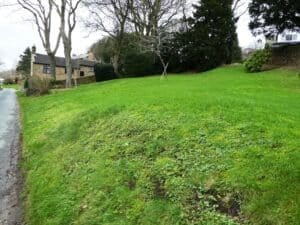
Common land at Nesfield, North Yorkshire, registered in 2024 following an application by the Open Spaces Society. Photo: Open Spaces Society
Under Part 1 of the Commons Act 2006, applications can be made to deregister common land throughout England, save in seven local-authority pioneer areas where the deadline for applications has already closed[1]. But the provision is a transitional window, which opened in 2014, and closes on 15 March 2027[2]. After that date, it generally will be impossible to deregister common land without providing an equivalent area of replacement land in exchange.
Our case officer Hugh Craddock said: ‘When commons and town or village greens first were registered under the Commons Registration Act 1965, many errors were made—both of omission and of wrongful registration. Land, including people’s homes and gardens, and farmer’s fields, sometimes were incorrectly included within the extent of a common or green, and the mistake went unnoticed at the time. And the registration of some commons was wrongly rejected, without any opportunity for public engagement.
‘Under the 2006 Act, some of these mistakes can be revisited. It is, for example, possible to deregister houses and their curtilage where the wrongful registration can be traced back to the 1965 Act. But it always was intended that there the opportunity to correct the registers would be time limited, after which the registers would be considered final. In most of England, the deadline for applications is now just one year away. Yet the society continues to encounter many cases where wrongly-registered land remains on the register, and the owners of that land have an ever-diminishing opportunity to do something about it.’
Hugh continues: ‘Had the government implemented the 2006 Act in the way that was intended, local authorities would have been under a duty to publicise opportunities to amend the register during a transitional period. But the government chose to deliver the opportunity to deregister land in isolation, and local authorities need have done nothing to alert local communities to the limited opportunity for deregistration. The public also has so far been deprived—save in the pioneer areas—of the opportunity to re-register commons which were wrongly thrown off the registers under the 1965 Act.’
Hugh added: ‘Local authorities should use the remaining time to write to those who own or occupy land in the most egregious cases of wrongful registration, and alert them to the fast-approaching deadline for action. We congratulate Cumberland and Westmorland & Furness Councils for doing so. The society has no objection to fully-evidenced applications which show that they meet the statutory requirements. But we tenaciously shall oppose any applications which are insufficiently supported by evidence, or just ineligible.
‘We have also called on the environment minister, Baroness Hayman, to extend the opportunity to re-register lost commons to the whole of England on a rolling programme. This would be of great public benefit as, once commons are registered, we have the right to walk on them, and to ride on some. We await her further consideration of our proposition.’
[1] The pioneer areas are: Cornwall, Devon, Blackburn with Darwen; Hertfordshire, Herefordshire, Kent, Lancashire (but not excluding any unitary authority within those areas). The deadline in the pioneer areas was 31 December 2020.
[2] Applications to deregister certain types of wrongly-registered common land can be made under paragraphs 6 to 9 of Schedule 2 to the Commons Act 2006. The closing date for such applications is 15 March 2027: see paragraph 14(1)(b) of Schedule 4 to the Commons Registration (England) Regulations 2014 (SI 2014/3038) (in relation to Cumbria and North Yorkshire), as applied by paragraphs 1(b) and 2(p) of Schedule 8 to the 2014 Regulations. After this date, deregistration of common land in England will be possible only under section 16 of the 2006 Act (where the provision of replacement land usually will be required), or under section 19—but only in the unusual circumstances that it can be shown that a mistake was made by the local authority in giving effect to the original registration.